Sunday, 18 September 2011

Preview of a pamphlet anthology: Poetry from Art at Tate Modern 2011


Next Saturday, 24th September, will be the launch of the pamphlet anthology I have just edited: Poetry from Art at Tate Modern 2011. Here is a preview of two poems from the pamphlet (scroll down).

Participants in Tate Modern's Poetry from Art courses, led by Pascale Petit, present a pamphlet of their work, including poems after Miró and responses to the permanent displays. The readings will be illustrated with a slideshow and opened by Marko Daniel who is Convenor of Adult Programmes and co-curator of the Miró show. The anthology will be for sale that evening then afterwards in the Tate Modern bookshop.

Saturday 24 September 2011 18.45–21.00
Free entry, readings, great views and wine.
Tate Modern Level 7 East Room
Bankside, London SE1 9TG

Free, no booking necessary
Tel: 020 7887 8888 visiting.modern@tate.org.uk
http://www.tate.org.uk/modern/eventseducation/coursesworkshops/24136.htm

The contributors are: Karen McCarthy Woolf, Matthew Paul, Anne Welsh, Jac Cattaneo, Wei-Lyn Loh, Margaret Beston, Bea Colley, Cath Kane, Kaye Lee, Seraphima Kennedy, Marc Mathison, Ali Thurm, Elizabeth Horsley, Mary Whistler, Andrea Robinson, Angela Dock, Beatriz Echeverri, Natasha Morgan, Michael Berg, Christine Voge, Ipsita Sinha and Laura-Jane Foley

Elizabeth Horsley's poem is a response to a memorable session we spent in one of the octagonal rooms of the Joan Miró: The Ladder of Escape exhibition, immersed in the glow of the meditative Blue I, II, II triptych. Miró's paintings are poems in themselves so it isn't surprising that his paintings generated many poems.

Elizabeth Horsley
The wardrobe is painted blue inside
after
Blue I, II, III by Joan Miró
 
The wardrobe is painted blue inside
and when I open it
the mirrored doors
welcome me in,
channel every side of me through.
I could step inside
let that orange silk dress
swish against me
like a swarm of butterflies;
I could be part of it all –
a glass box full of kingfishers,

but I would rather be outside
dressed in a long shift
of Madonna-blue cotton,
lying in the summer grass
looking at the sky.
I would rather float
in the Hebridean sea
and let the seals watch me
as they watched me once before.
If I could lie in that blue
that would be enough.


In the autumn term, when Ana Mendieta's video Blood and Feathers #2 was on display in the Energy and Process wing, we watched Mendieta perform a ritual on a riverbank, which consisted of her pouring blood over herself then rolling onto white feathers and holding her arms out like wings. This inspired poems about rites of passage and ritual dress and the following is Natasha Morgan's personal response:

Natasha Morgan
On Her Very Last Day
after Blood and Feathers #2 by Ana Mendieta

When my mother lay
in her hospital bed
on her very last afternoon in November
six years ago,

when the sun broke through the plastic strips
that layered the windows
of that suburban room,
promising one last golden moment,

when I slipped outside
into her garden, for roses,
with secateurs in hand, for the pink roses
to take them in their full glory
for the very last time,

when I returned with my
arms full, they fell all around, all around,
because she had not waited for them
or for me.

And so I sat with her,
both of us still, but she more still than me.
And I washed her body and edged her stiffening limbs
into her white cotton nightdress, fresh that day

and spread a white cashmere shawl
to cover her right down to her feet,
and gave her my socks
for the journey.

And when all was done, and well done, and done in good time
I sat with her in the smell of the roses
that rose around us as the sun went down.


Thursday, 15 September 2011

Return to the Ménagerie in the Jardin des Plantes

It's fourteen years since I first visited the Ménagerie in the Jardin des Plantes of Paris, when I was writing The Zoo Father. I used to go there every day then, and first went back last year. There are not so many big cats now – no black jaguar, no pumas, no lions. But there is a snow leopard, as there was then, in the Fauverie. No English word quite captures the French word 'Fauverie'; I've seen it translated as 'big cat house', but fauve means wild beast. In a way it's good there aren't so many big cats because the cages are too small as this is the second oldest zoo in the world, an old-fashioned one. There's more conservation work going on now and the zoo was full of young animals born in the spring or earlier this summer. I saw a young yak, and a Przewalski foal, but the mother was still with her doted companion, a nanny goat, which I must confess last year I mistook for her rather shaggy foal until the horns came into view!

As before, I searched for one of my favourites, the Amazonian king vulture. He's the gaudy headed one below. Twelve years ago there was a baby king vulture in the nursery, in a baby's playpen. As I was wandering around, trying to see as much as possible before closing time, I heard a maniacal laugh and made for the source of it: two laughing kookaburras. They set the macaws off who screeched at each other and started to do acrobatics on their bars. The whole zoo at that point seemed to wake up and become vibrantly alert, disregarding the humans. It gave me a headache as I dashed from one cage to another watching them.

I returned to the little farm to feed the goats prickly leaves. They licked my hands and I stroked their bristly heads and horns. No keepers were there and families were feeding them crackers and bread. One of my favourite paths is along the owl cages. I love reading their names in French as much looking at them. The eagle owl is 'grand-duc'. The great grey owl looked like a ghost from a Max Ernst forest and the snow owl was still there, though I suppose he's a new one. I particularly love his name 'harfang des neiges', though still prefer the English 'snow owl', and the word 'owl' to the French words for owl, good as they are: chouette, harfang, hibou, effraie (barn-owl, screech owl, fright).


 The king vulture. His mate was eating a carcass on the floor.

 The yak mother and son


 Can't remember what this creature was but the three of them were very busy eating rats

 The przeswalski mare with her lifelong companion, a goat.

 Great grey owl

 The kookaburras get going

The macaws listen


 and join in

 Nile croc

Feeding the goats


 Le Paresseux – sloth, in his new rainforest enclosure


Monday, 12 September 2011

Photos of the Marché aux Oiseaux in Paris

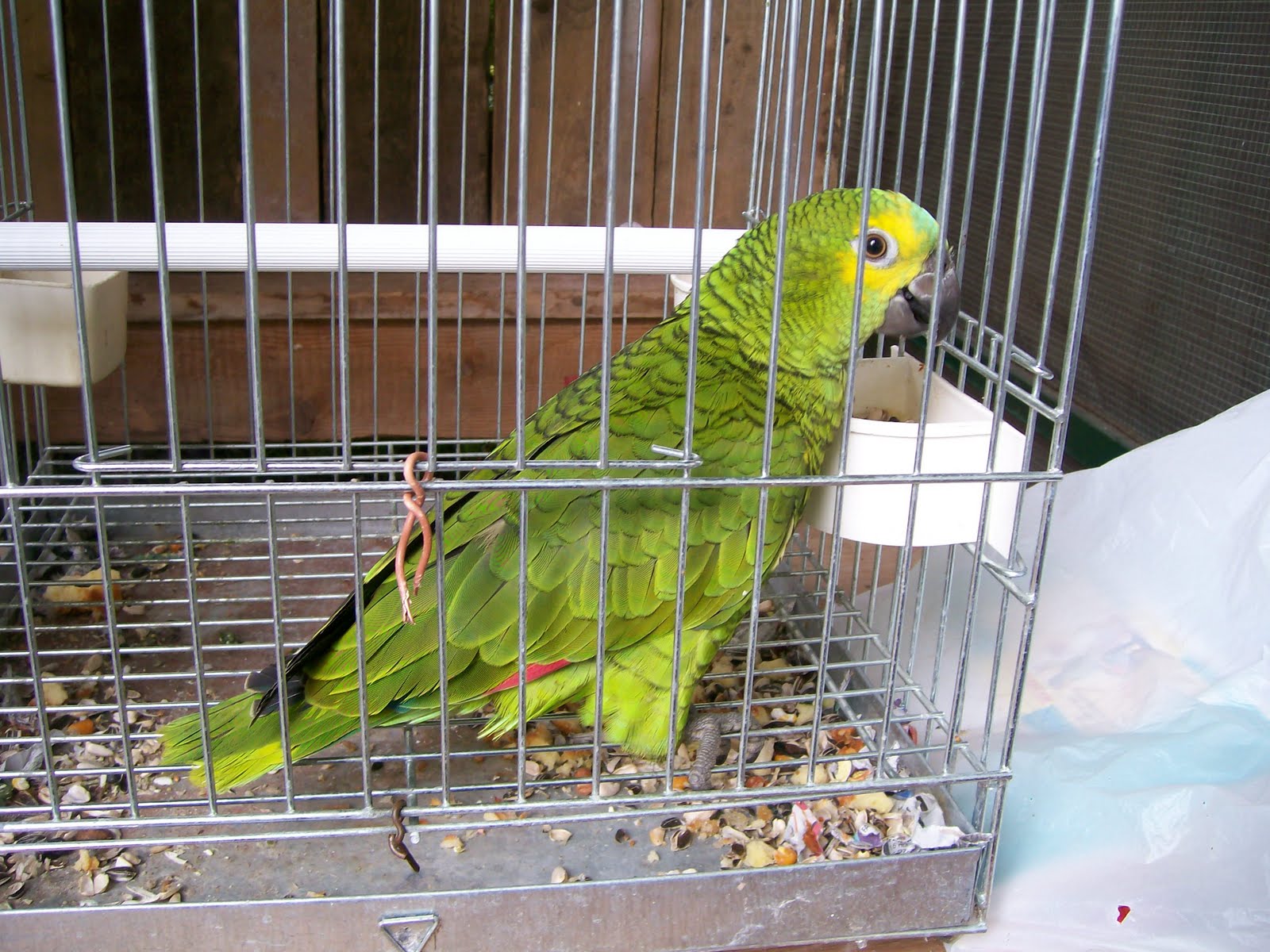
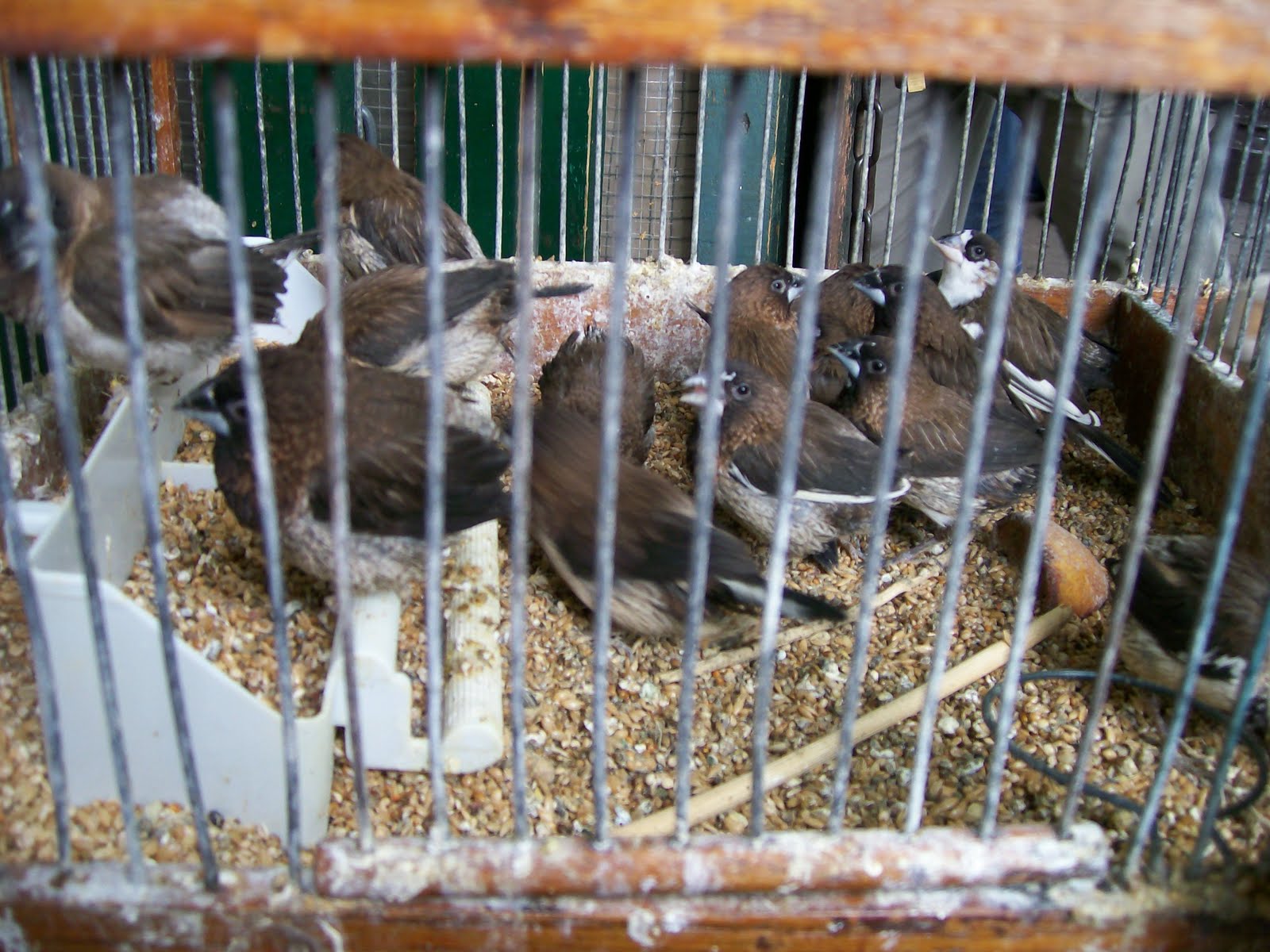
One of the things that drew me to write in Paris a second time this summer was the discovery that there is a Marché aux Oiseaux on the Île de la Cité, just behind the esplanade of Notre Dame. It's been there since 1808 and is on Sundays. The rest of the week it's a flower market. Some of the cages have one bird in, others are sadly crammed with budgies, quails, lovebirds and cockatiels.

There were
kakarikis – red-crowned parakeets, turtle doves, Japanese sparrows, African greys and many more, even rabbits and three particularly cute black and white rats. They all made quite a noise among the flowers and accessories, the vistas of hanging empty cages for sale. Some birds seemed treated with care, many not. I was there on a research mission but what a feast of colour! I witnessed a few sales. A sudden squawk and a hand was thrust into a cage then out, a tiny flurry of canary feathers dispatched into a paper box and one yellow feather left floating down.


Thursday, 8 September 2011

Hand-feeding the Notre Dame sparrows

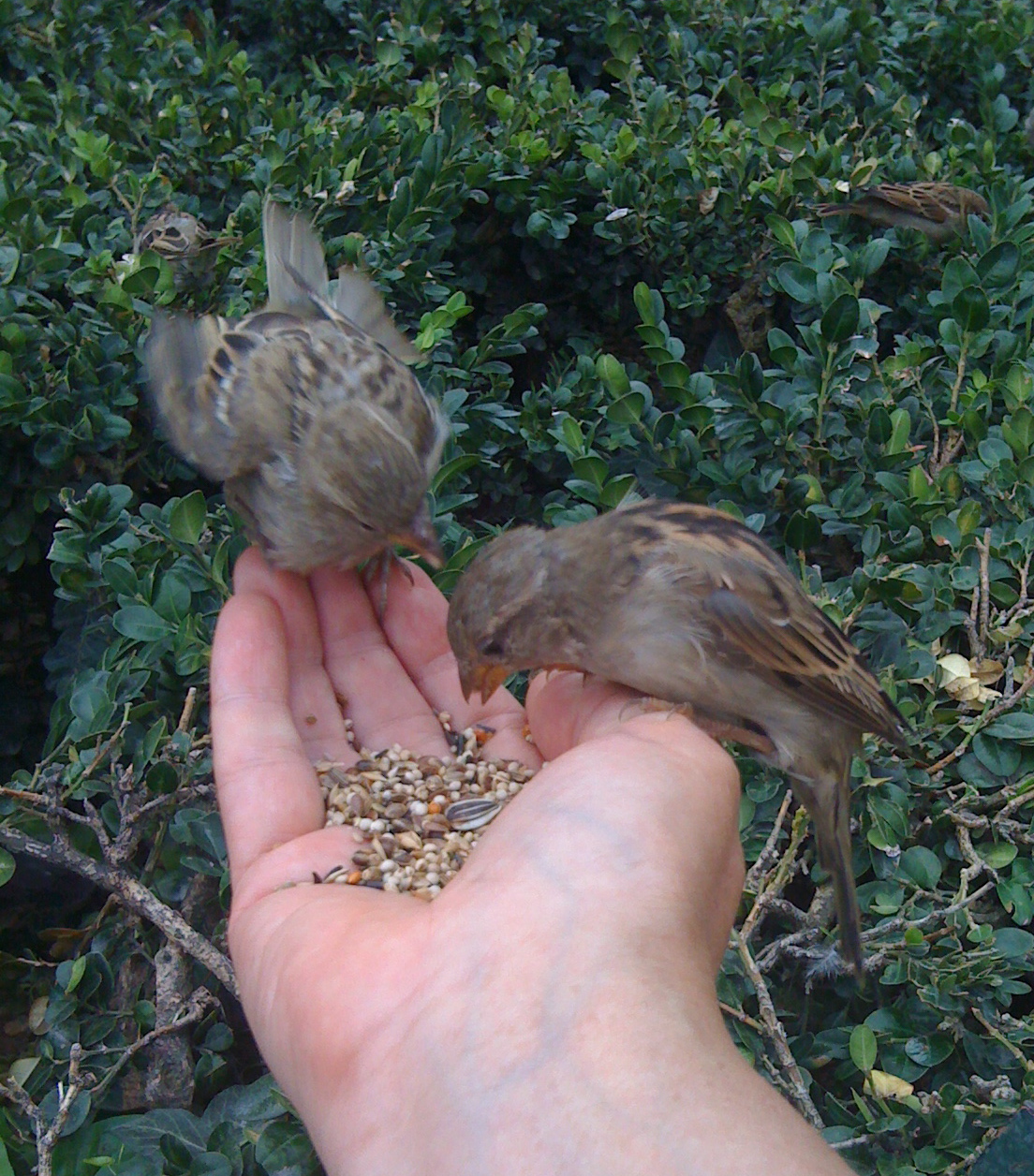
Every time I stay in Paris there are new surprises. One of the highlights of last week's visit was hand-feeding the sparrows in front of Notre Dame. The box hedges on the parvis are bustling with them, mostly juveniles – their breasts and wings still downy. Every day I was drawn back. The first day I just watched as two regulars hand-fed them and a few tourists joined in.  The second day one of the men gave me a handful of birdseed and I stood up on the low concrete wall around the privet and held out my hand. I waited, and quite soon a young female sparrow hopped onto my fingers. Her claws grasped me and she bent down and picked up a seed with her yellow and fawn beak. It took her quite a while to crack and eat it and I managed to glimpse her peach tongue. She stayed on my hand for half an hour, batting off all intruders by raising her wings and fiercely beating them, cheeping at the same time.

The second day
I had up to three sparrows feeding together, some fully grown males as well as females and juveniles. The males have darker colouring around their heads, black and brown markings. By this time I'd been to the Marché aux Oiseaux and bought some small wild-bird grains. On the third day (I would pass there on my evening walk after a day's writing) I had six sparrows feeding together, males and females. At one point pigeons landed and starlings. That day I fed the moineaux for an hour and a half, as I was leaving the next morning, to return to London where sparrows are scarce. These pictures were taken on my iPhone with my free hand, though the last six-sparrow day I didn't take any as I wanted to just concentrate on the experience. It was the same with Notre Dame, every time I looked at the cathedral, especially the facade and towers, I saw more. I looked and looked harder.


 The young female who stayed on my hand for half an hour the first day


 Here you can see the beginning of the sending-off display, as one bird starts to raise her wings to beat them at the other.


The man with the black hat is one of the two regulars. They come every day, all day. The other one told me he comes because it makes him feel better when things aren't going well.

Tuesday, 23 August 2011

The Languedoc, August 2011

I have been visiting the Languedoc Rousillion since I was a child, when my mother bought a steep terraced vineyard near Lodève, with two shepherds' stone huts and a deep banked stream in the sous-bois. We used to camp in the stone huts, after the fire brigade had smoked out the hornets' nests. There are no vines left now but those childhood summers have drawn me back again and again to this wild land with its limestone moors and gorges.

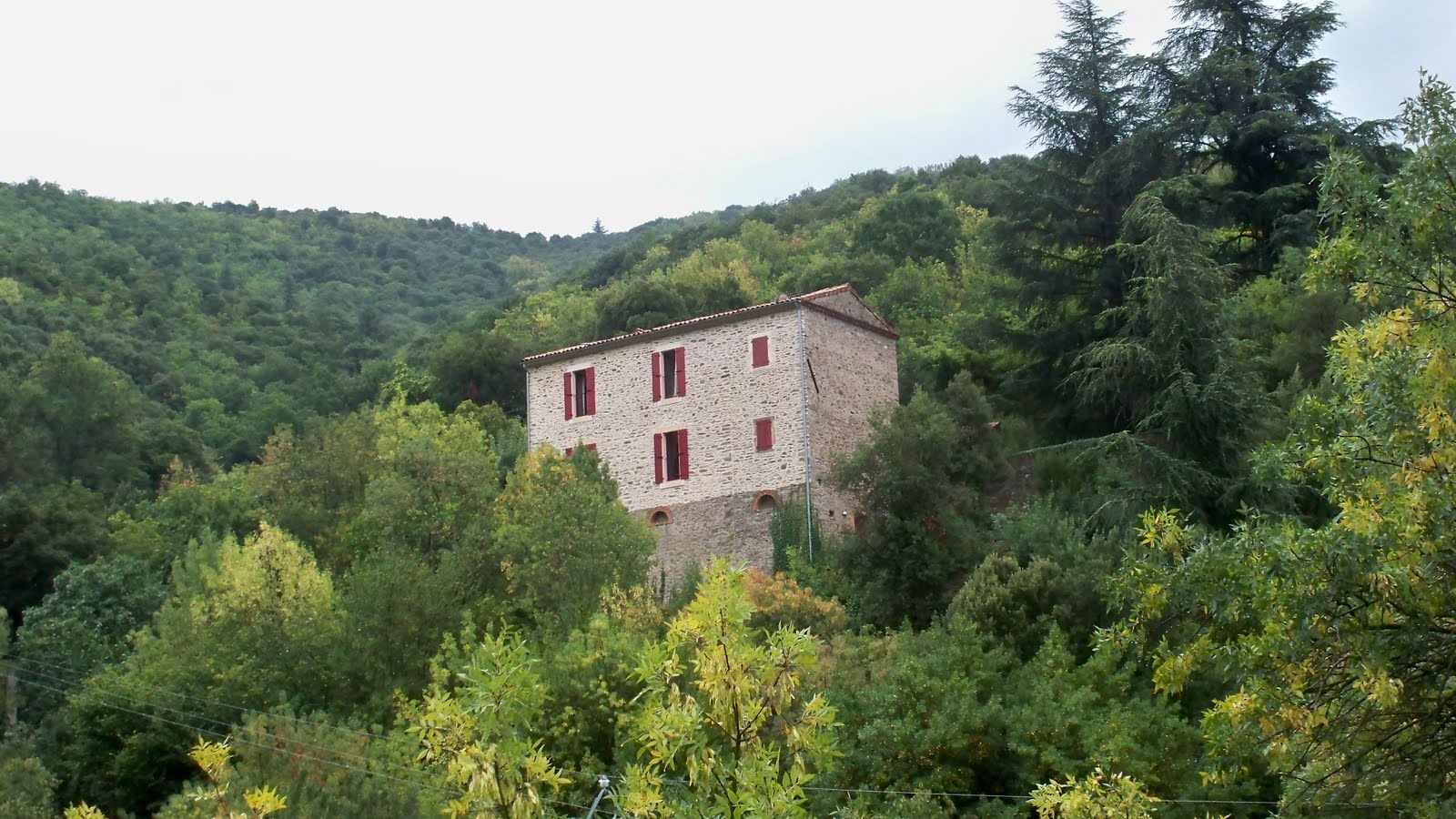
This August, B and I rented a house up the remotest hill of the Orb Valley for one week. The evening we arrived the snowy tree crickets' chirrs filled the house from every window, a sound much like moonlight if it had a voice, more otherworldly than the daytime cicadas, another sound I love. Ours was the last house of the hamlet of Le Lau and the surrounding woods are wild boar hunting grounds. One morning I heard the dogs and hunters capturing a boar; its shrieks gave me a migraine. At night I heard genets, which sound like a cross betweeen a
cat and a fox. I saw one darting across the car park when we visited the Gorge de l'Hèric, spotted and with a long bushy tail. On our last night, we heard a boar snuffling and grunting just a few feet away from us as we sat on the unfenced terrace. It was enthralling to be so close but after standing closer to peer at him (he could have charged!) we decided to retreat to safety.

To get to the Gorge du Tarn, Gorge de la Jonte (and its vultures) and the Chaos of Montpellier le Vieux, B had to drive up the Pas de l'Escalette. This is a spectacular pass from the Languedocien plain to the Causses (limestone moors) of the most southerly Massif Central range. The A75 autoroute recently replaced the old A9 road, which we both remember, and that, in its time, replaced an iron ladder for passengers to disembark from their carriages, climb up the cliff, then continue in another carriage. Now, there is a series of tunnels that cuts through then winds round the Steps of the Ladder.  It's only this time that I realised just how much this landscape paved the way for my obsession with Venezuela's Lost World, with its cliff-bordered sky-islands. The causses and gorges were the prototype, so that when I journeyed to the Lost World I recognised it as home, though it plainly wasn't, and is actually hostile in its remoteness and grandeur.
View from the lane above Le Lau across the Orb Valley, early morning


View from Chaos of Montpellier le Vieux

Village of Trèves on the road to Gorge du Tarn

Gorge du Tarn

The medieval and higgledy hamlet of Le Lau from the kitchen door

The sudden storm from the living-room window, thunder echoed around the hills and the wind was wild!

The house from the lane to Le Lau

Chaos of Montpellier le Vieux on the Causse Noir

Chaos of Montpellier le Vieux is just like the tops of Venezuela's plateaus, with eroded rock shapes, though these are limestone and those are quartzite sandstone.

A typical panorama

Vineyards in the Orb Valley, on our way to the Forest of War Veteran Writers

Pas de l'Escalette

Pas de l'Escalette tunnels, no photo does this pass justice. It emerges onto the Larzac Causse, which leads to the Millau viaduct which is 750 metres high and leads to the upper gorges of the Tarn and Jonte.